On the mountain
Appetite drops sharply above 4,000 m, which is precisely when you need the calories. What follows is what our crew cooks, how the day is fed, and what we do about dietary requirements and allergies.
At a glance
- Three daily meals
- Trail snacks
- Hydration
- Altitude appetite
- Dietary requirements
- Summit nutrition
Food on Kilimanjaro is fuel as well as comfort. TrekUp’s mountain chef prepares breakfast, lunch and dinner, supported by snacks. Menus are designed around carbohydrates for trekking energy, protein for recovery and a mix of familiar and locally available foods. Appetite often decreases with altitude, so eating consistently matters even when you do not feel hungry. Tell the guide or cook early if nausea or food intolerance is limiting intake. Hydration is equally important, although drinking excessive quantities is not a treatment for altitude illness. Follow your guide’s practical hydration guidance. Inform TrekUp of allergies, religious requirements, vegetarian/vegan preferences or other dietary needs before arrival. Bring a modest quantity of personal energy products you already know your stomach tolerates, particularly for summit night.
Food is part of your Kilimanjaro strategy
Climbing Kilimanjaro requires sustained energy over several consecutive trekking days. At TrekUp Kilimanjaro, mountain meals are planned to be warm, practical, varied and energy-supporting, with a strong emphasis on carbohydrates, adequate protein, vegetables, fruit and fluids. Our climbing packages include three prepared meals per mountain day, nutritious snacks, purified drinking water and a professional mountain chef.
At altitude, some climbers experience reduced appetite or mild nausea. That makes familiar, easy-to-eat foods particularly valuable. Our goal is not fine dining at 4,000–5,000 metres; it is to provide appetizing food that helps you continue eating and drinking when your body is working hard.
At a glance
- Daily meals
- Breakfast, lunch and dinner
- Between-meal support
- Nutritious snacks and hot drinks as appropriate
- Water
- Purified drinking water supplied during the trek
- Dietary requirements
- Tell TrekUp before arrival so the mountain kitchen can plan properly
- Menu note
- Examples in this guide are illustrative; actual menus vary with route, day, season, availability and dietary needs
A typical Kilimanjaro breakfast
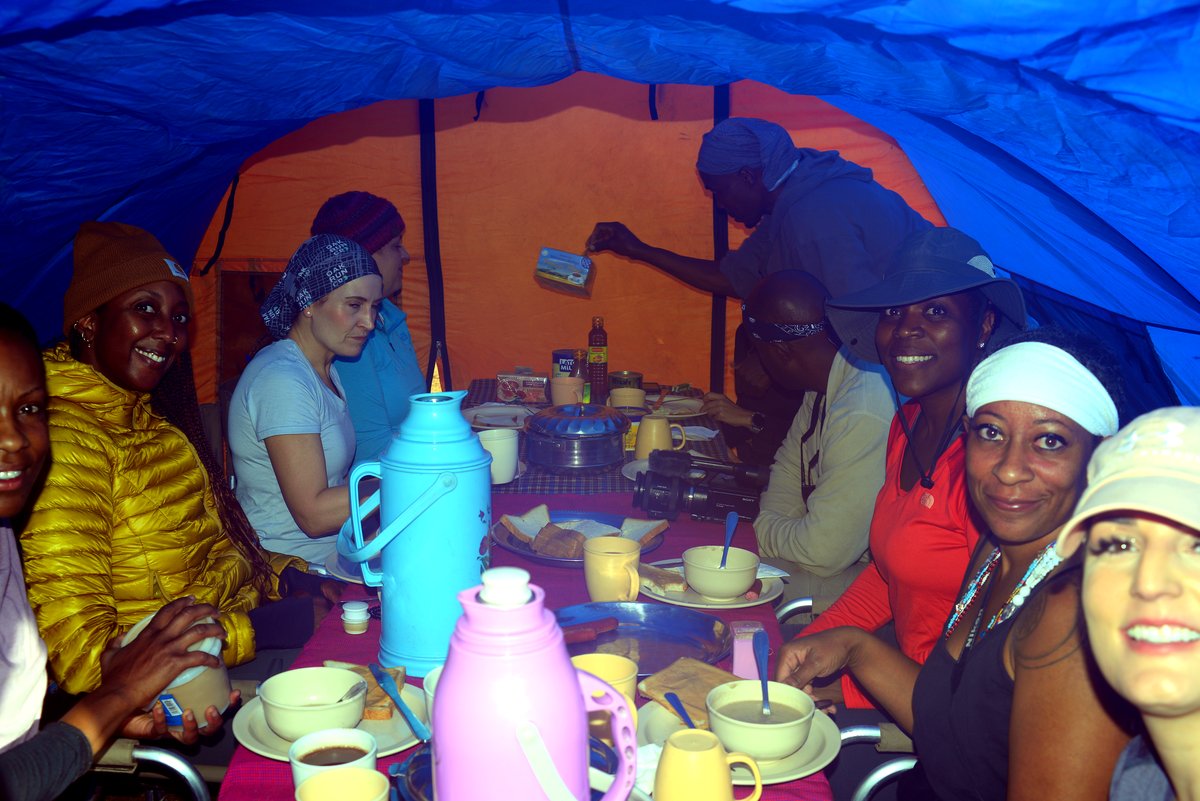
Breakfast is usually warm and substantial because it prepares you for several hours of trekking. The exact combination changes from day to day.
- Porridge or hot cereal
- Eggs — boiled, fried, scrambled or omelette depending on the menu
- Toast or bread with jam, honey or peanut butter
- Pancakes or similar carbohydrate-rich breakfast items
- Sausage on selected days
- Fresh seasonal fruit when practical
- Tea, coffee, drinking chocolate or other hot drinks
TrekUp tip: Even if you wake with a reduced appetite, try to eat something. Porridge, toast, pancakes and hot drinks are often easier to manage than a heavy meal at higher camps.
Lunch on the trail
Lunch depends on the route and the day's walking schedule. It may be a packed lunch eaten at a scenic rest point or a prepared/hot meal when logistics and timing allow. Packed lunches are designed to be portable while still supplying useful energy.
- Sandwiches or wraps with egg, cheese, chicken, tuna or suitable alternatives
- Boiled egg
- Fresh fruit
- Chicken or meat item on selected days
- Bread, pancakes or chapati
- Rice, pasta or potatoes when a hot lunch is served
- Vegetables or salad when practical
- Juice or a hot drink depending on the setup
Dinner at camp
Dinner is an important recovery meal. After arriving at camp, changing into warm dry clothing and resting, trekkers are generally served a warm meal in the dining area. Soup is especially useful because it is warm, palatable and contributes fluid.
- Warm vegetable, pumpkin, carrot, tomato or lentil soup
- Rice, pasta, potatoes, chapati or ugali
- Chicken, beef, fish, beans or lentils depending on the day's menu
- Cooked seasonal vegetables
- Stews, curries or pasta sauces
- Fresh fruit or a simple dessert when available
- Tea, coffee or hot chocolate
Sample mountain day menu
| Meal | Example | Purpose |
|---|---|---|
| Breakfast | Porridge, eggs, toast with honey/jam, fruit, tea or coffee | Start the day with carbohydrate, protein and fluids. |
| Trail snack | Personal energy bar, nuts/dried fruit, biscuits or TrekUp snack | Small, regular energy top-ups. |
| Lunch | Sandwich/wrap, boiled egg, fruit, snack; or hot rice/pasta meal | Refuel for the second half of the walking day. |
| Afternoon | Tea/hot drink with popcorn, biscuits or similar snack | Warm up and replace energy after reaching camp. |
| Dinner | Soup, rice/pasta/potatoes, chicken/beans/lentils, vegetables, fruit | Recovery and preparation for the next trekking day. |
Why carbohydrates feature heavily
Rice, pasta, potatoes, bread, porridge and similar foods are common on Kilimanjaro because they are practical trekking foods and provide accessible energy for long walking days. Protein sources such as eggs, chicken, beef, beans and lentils complement the meals, while vegetables and fruit add variety and micronutrients.
The exact amount any individual should eat varies. Rather than focusing on a rigid calorie target, trekkers should aim to eat consistently, listen to the guide and communicate if appetite drops significantly or nausea makes eating difficult.
Snacks — bring some of your own favorites
TrekUp provides nutritious snacks, but we also recommend bringing a modest quantity of personal favorites. At altitude, familiar foods can be much easier to eat than something you normally would not choose.
- Energy or cereal bars you have already tested
- Trail mix
- Nuts and dried fruit
- Chews or sweets for quick energy
- Crackers or biscuits
- Small chocolate portions — remembering they can melt low down and become very hard in summit cold
- Electrolyte products that you already tolerate
Avoid bringing an excessive snack bag. Your porter-carried luggage has a weight allowance, and too much unfamiliar sports nutrition can cause stomach problems. Test gels, electrolyte powders and energy products during training rather than experimenting on summit night.
Summit-night food
Summit night is different from an ordinary trekking day. You leave camp late at night or around midnight, walk slowly for many hours in cold conditions and may not feel like eating a normal meal. Before departure, the team provides a meal or substantial snack appropriate to the schedule. During the climb, small high-energy foods are usually easier to manage than large portions.
- Keep summit snacks in accessible pockets rather than buried in your pack.
- Choose foods you can eat while wearing gloves.
- Avoid relying on one type of gel or very sweet food for the entire ascent.
- Protect food from freezing where possible by keeping critical snacks closer to your body.
- Eat small amounts regularly rather than waiting until you feel completely depleted.
Hydration on Kilimanjaro
TrekUp supplies purified drinking water during the climb. Your guide will advise you on filling bottles and your hydration routine. Carry sufficient bottle/bladder capacity as specified in your packing list.
Hydration matters, but drinking extreme quantities is not a substitute for acclimatization and can itself be harmful. Drink consistently according to thirst, exertion and your guide/medical advice rather than forcing excessive water. Report persistent vomiting, inability to drink, severe headache, confusion or other concerning symptoms to your guide immediately.
- Carry wide-mouth bottles as well as a hydration system where recommended.
- On summit night, hydration tubes can freeze; insulated bottles are valuable.
- Warm drinks at camp can make fluid intake easier in cold conditions.
- If you use electrolyte products, bring ones you have already tested.
Vegetarian, Vegan & special dietary requirements
Many common dietary patterns can be accommodated with advance planning. TrekUp should know your requirements before the climb—not when the crew is already on the mountain.
- Vegetarian
- Vegan
- Gluten-free requirements
- Dairy-free / lactose-related requirements
- Religious dietary requirements
- Food allergies
- Other medically necessary dietary restrictions
Food allergies require particular care because a mountain kitchen has limited space and equipment. Tell TrekUp the exact allergen, severity, cross-contact concerns and emergency plan well before travel. If you depend on specialist products that may be difficult to source in Tanzania, we may advise you to bring an appropriate supply.
Food hygiene & mountain kitchen reality
Kilimanjaro cooks work in a demanding environment with limited kitchen infrastructure, changing weather and ingredients that must be carried by the support team. Good expedition planning therefore emphasizes clean food handling, sensible menus and ingredients that remain practical as the climb progresses.
Freshness and variety can naturally change at higher camps. Menus may also be adjusted because of weather, supply conditions, route logistics or a group's dietary requirements. A sample menu should never be interpreted as a guarantee that a particular dish will be served on a particular day.
If you lose your appetite
Reduced appetite can occur at altitude. Tell your guide rather than quietly skipping meals. Your guide needs to understand the full picture, particularly if appetite loss occurs with headache, nausea, unusual fatigue, dizziness or other altitude-related symptoms.
- Try smaller portions more frequently.
- Choose simple foods you find easy to tolerate.
- Continue taking fluids sensibly.
- Do not hide vomiting or persistent nausea.
- Do not use appetite loss as a reason to ignore other symptoms of altitude illness.
What trekkers should tell TrekUp before arrival
| Information | Why We Need It |
|---|---|
| Dietary preference | Allows the chef to plan suitable alternatives. |
| Food allergies | Essential for risk planning and ingredient selection. |
| Religious restrictions | Allows menus to be planned respectfully. |
| Intolerances | Helps identify realistic substitutions. |
| Foods you absolutely cannot eat | Useful when appetite is reduced and alternatives matter. |
| Special nutrition products | Lets us advise whether you should bring your own supply. |
Frequently asked questions
Will I get three meals every day?
Yes. TrekUp's standard mountain package provides breakfast, lunch and dinner, with snacks and drinking water. The format can vary on summit day and according to the route schedule.
Is all food carried from the start?
Mountain food logistics vary by route and expedition. The support team plans ingredients, transport and any permitted resupply according to the itinerary.
Can I bring my own snacks?
Yes, and a small selection of favorite, tested snacks is recommended.
Will I eat Tanzanian food?
Menus can include both familiar international-style trekking foods and Tanzanian staples such as chapati or ugali. The objective is variety and food that trekkers will actually eat.
What if I am vegetarian or vegan?
Tell TrekUp in advance. These diets can generally be planned for, although exact ingredients depend on local availability.
Do I need protein powder?
Most climbers do not need specialist supplements for a standard Kilimanjaro trek. If you regularly use a product and tolerate it well, discuss it with your clinician or nutrition professional if appropriate and bring your own supply.
Is alcohol served on the mountain?
Alcohol is not part of TrekUp's mountain nutrition plan. It is not appropriate for hydration or acclimatization.
What if I cannot eat at altitude?
Tell your guide promptly. Small, simple portions may help, but appetite loss combined with other symptoms needs to be considered as part of your altitude assessment.
TrekUp pre-climb food checklist
- Tell TrekUp about all dietary requirements and allergies before travel.
- Pack a modest supply of familiar, tested trail snacks.
- Do not experiment with new energy gels or supplements on the mountain.
- Bring any specialist dietary products you have been advised cannot be reliably sourced locally.
- Carry snacks in your daypack, not only in the porter duffel.
- Eat regularly even when your appetite becomes lower.
- Drink consistently and follow your guide's hydration instructions.
- Report persistent nausea, vomiting or inability to eat/drink.
- Keep summit-night snacks accessible and protected from the cold.
GOOD FOOD. STEADY ENERGY. ONE STEP CLOSER TO UHURU PEAK.
More on on the mountain