On the mountain
Sleep quality is the least discussed and most consequential part of a Kilimanjaro itinerary. Tent size, mat thickness and whether you have somewhere warm to eat all feed directly into it.
Sleep quality is the least discussed and most consequential part of a Kilimanjaro itinerary. You are asking your body to adapt to thinning air, and it does most of that work overnight. Anything that costs you sleep costs you adaptation.
Which is why tents, mats and mess arrangements are worth more attention than they usually get.
Your sleeping tent
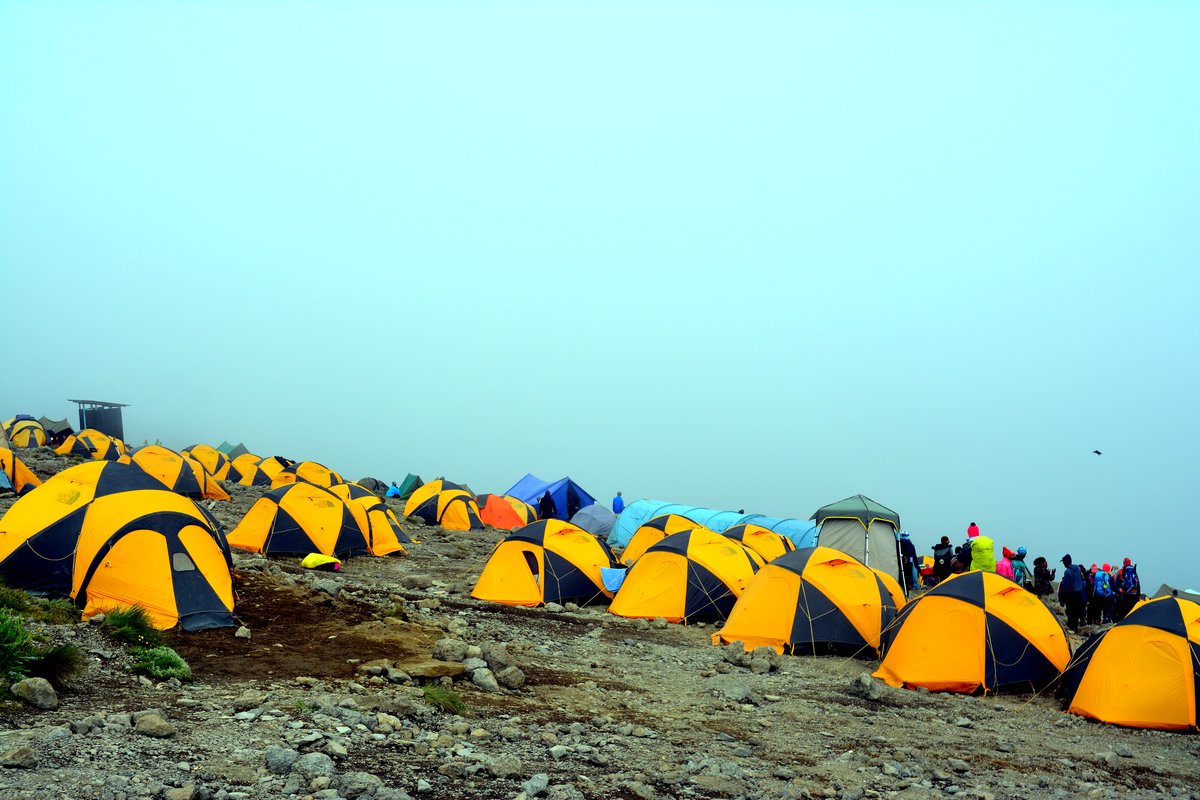
Typically a four-season mountain tent shared between two, or used alone if you are travelling solo or have paid a single supplement. What to look for:
- Size. A tent sold as a two-person is often uncomfortably tight for two adults plus duffels. Operators who use three-person tents for two climbers are buying you real comfort.
- Condition. Ask how old the tents are. Zips, poles and waterproofing degrade fast on a mountain used year-round.
- A proper vestibule for boots and packs, so wet gear is not in with you.
Sleeping mat
Usually a foam mat as standard. An inflatable insulated mat is a significant upgrade and often available — it is warmer, because most heat is lost downward into frozen ground, and considerably more comfortable on rocky camps like Barafu.
If you upgrade one thing, this is a strong candidate.
Sleeping bag
Not usually included and frequently rented. You want something rated to at least −10°C, and a liner adds warmth as well as keeping a rented bag clean.
Sleep warm rather than cold: eat something before bed, wear dry clothes rather than what you walked in, and put tomorrow's clothes in the bag with you so they are not frozen in the morning.
The mess tent
A standing tent with a table and chairs where you eat, brief and sit out the afternoon. It is the difference between a sociable trip and one where everybody retreats to their own tent at four o'clock — and in rain it is the only communal space that exists.
Small camping stools and no shelter is a meaningfully worse week. Ask what is provided.
What porters carry, and what you carry
Porters carry tents, food, cooking equipment, water and your duffel. You carry a daypack with the day's water, layers, snacks and camera — usually five to eight kilograms.
Park regulations cap what a porter may carry, and reputable operators weigh loads at the gate. This is a welfare issue as much as a logistics one.
What we provide on the mountain
On camping routes — every route we run except Marangu, which sleeps in park huts — the following comes with the climb:
- Quality four-season mountain tents
- Comfortable sleeping mattresses
- A dining tent with tables and chairs
- A cooking tent and complete camp equipment
- A private portable flush or chemical toilet, with its own tent and a dedicated porter, for the whole trek
- Hot water for washing each morning and evening, where practical
What you bring yourself is the personal layer: boots, clothing, sleeping bag, down jacket, trekking poles and daypack. A sleeping bag and a down jacket are the two most worth renting rather than buying for one week — see the packing list for the full breakdown.
More on on the mountain