
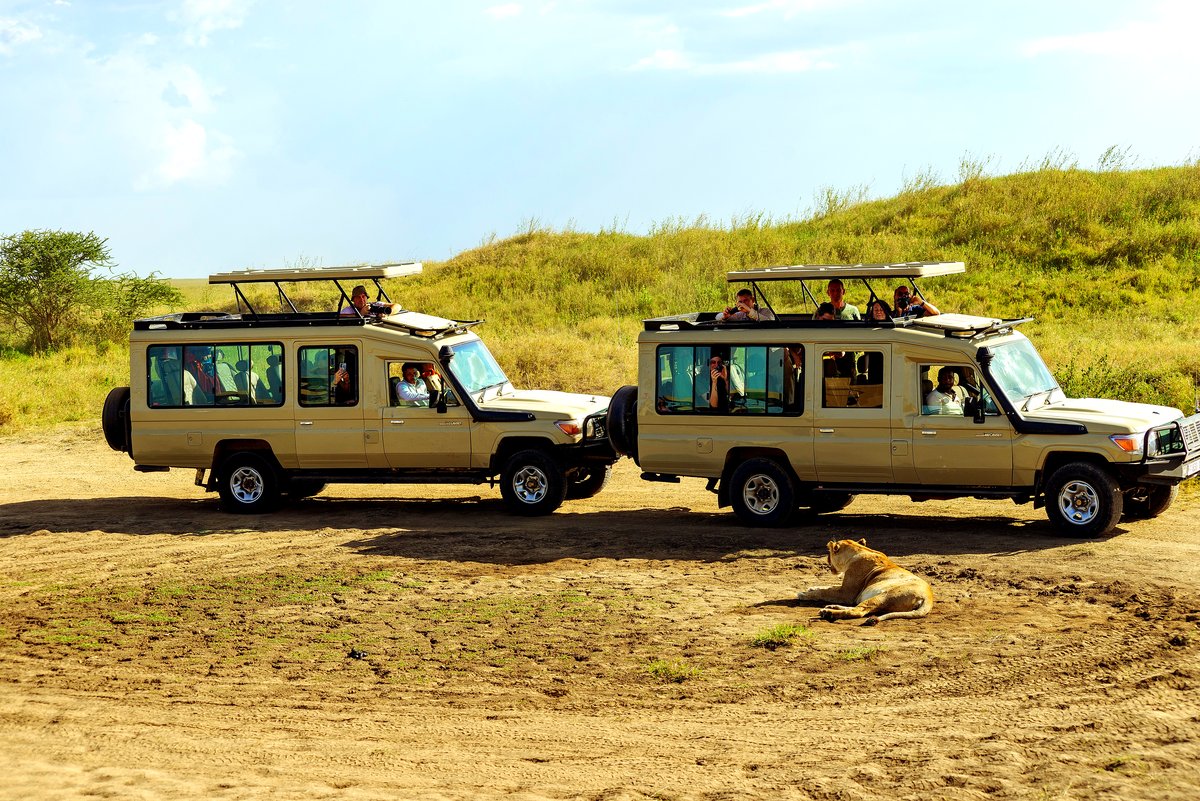
The natural next week
Safari after Kilimanjaro
You have already done the hard part. Two to five days, and the rest of Tanzania.
After a week of walking, several days in a vehicle with someone else driving is close to ideal. The parks are near, the timing works, and you are already in the country.
You have already done the hard part, and the expensive part — getting to northern Tanzania. The Serengeti, the Ngorongoro Crater and Tarangire are all within reach of Arusha, an hour or so from where your climb ends.
After a week of walking, several days in a vehicle with somebody else driving is close to ideal. This is the single most common addition our climbers make, and almost nobody regrets it.
Why afterwards rather than before
Two reasons, and they both matter.
Recovery. A safari is sitting down. After six to nine days of walking and one very long night, that is exactly what your body wants — and you still see everything.
Focus. Doing the safari first means arriving at the mountain having already had the holiday. Climbers who go straight from a comfortable lodge to Barafu generally find the adjustment harder than those who earn the lodge.
There is one argument the other way: if you are combining Kilimanjaro with Mount Meru for acclimatisation, Meru comes first and the safari still comes last.
| Days | Realistically covers | Good for |
|---|---|---|
| 2 days | Tarangire and Ngorongoro Crater | The minimum that is worth doing. Big scenery, high density of animals. |
| 3 days | Adds Lake Manyara, or more crater time | A comfortable short safari with less driving per day. |
| 4 days | Reaches the Serengeti | The first length at which the Serengeti is more than a long drive. |
| 5+ days | Serengeti properly, with time in one area | Migration timing, photography, or simply not rushing. |
The parks, briefly
Ngorongoro Crater
A collapsed volcanic caldera roughly twenty kilometres across, with a permanent population of animals living on the crater floor. Extraordinarily high density in a contained area, which means a very high chance of seeing a great deal in a single day. Closest to Arusha of the major sites.
Tarangire
Baobabs, enormous elephant herds, and far fewer vehicles than the Serengeti. Often the first stop because it is nearest, and frequently the one people say they enjoyed most.
Serengeti
Vast, and the reason most people come. It needs time — a day of driving to reach it and back is a poor use of a short safari. Worth four days minimum.
Lake Manyara
Smaller, with a groundwater forest, flamingos on the lake when water levels suit, and good birdlife. Often added as a half-day.
The wildebeest migration
The migration is a continuous year-round movement, not an event, and where the herds are depends on the month. If seeing it is a priority, that should influence when you climb — which means deciding early, because it constrains both ends of the trip.
Practical points
- Leave a rest day between the mountain and the safari if you can. One night is enough, and you will value it.
- You need almost nothing new. Safari packing is light clothing, a hat and sunscreen — all of which you already have.
- Park fees are a large share of safari cost, exactly as on the mountain, and are charged per day.
- Book it with the climb. Arranging it afterwards from Moshi is possible but more expensive and less good.
Add a few days to your climb
Tell us how long you have after the mountain and we will put together something that suits how you will actually feel — which is tired.